


According to Christian belief, Adam and Eve are the origin of marriage. Throughout the ages, marriage has meant different things to different people, starting with the first marriage between the two in the Garden of Eden. Marriage’s history and current perception have also undergone substantial transformation.
In practically every community on the planet, marriages take place. The history of marriage has changed over time, and marriage has taken many different forms. Over time, there have been sweeping trends and changes in how people view and define marriage, such as the transition from same-sex to interracial weddings and polygamy to monogamy.
What is a marriage?
According to the definition, marriage is a culturally accepted union of two individuals. After getting married, these two start acting in similar ways in their personal lives. Matrimony, or wedlock, is another name for marriage. However, marriage has always been distinct in various cultures and religions.
The Old French word matrimoine, which means “matrimony marriage,” and the Latin words mātrimōnium, which means “wedlock, marriage” (in plural, “wives”) and mātrem (nominative māter), which means “mother,” are the direct sources of the word matrimony. The aforementioned definition of marriage can be a more modern and contemporary one, which differs greatly from the concept of marriage in the past.
For a very long time, marriage was never about cooperation. The main goal of marriage in the majority of ancient societies was to bind women to men so that they would subsequently bear their husbands legal children
Read more : Pros and Cons of Marriage to Be Considered Before Tying the Knot
In such cultures, it was common for men to marry more than one woman, have intercourse with someone outside of their marriage, and even divorce their spouses if they were unable to conceive.How long has the marriage lasted?
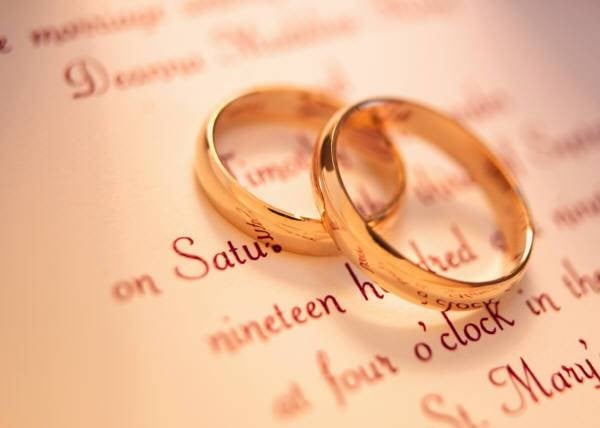
Two-person gold wedding bands
Many people are curious about who invented marriage, when it began, and how. When did someone first consider the possibility of getting married, having kids, or cohabitating with someone?
Although there is no set date for the origin of marriage, the earliest marriage records date from 1250 to 1300 CE, according to research. According to additional evidence, marriage may have existed for about 4300 years. Marriage is said to have existed before this period.
Marriages were performed as family connections for political negotiations, reproduction, and financial gain. But as time went on, not only did the idea of marriage evolve, but so did the motivations behind it. This article examines the various types of marriage and its historical development.
Marriage customs from that era to the present
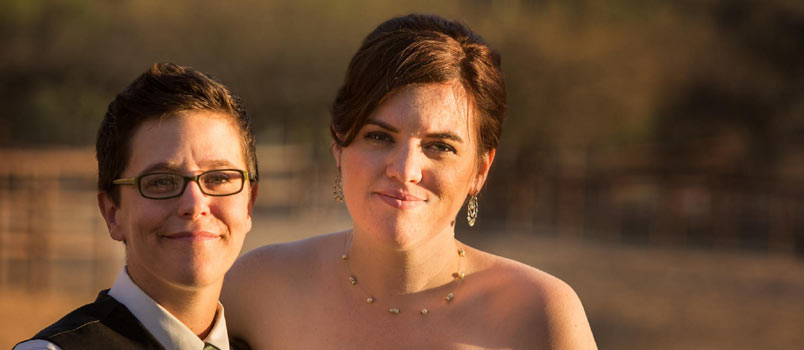
A joyful couple recently married
The idea of marriage has evolved over time. Depending on the community and period, there have been several kinds of weddings. To see how marriage has evolved over the centuries, read more about the different types of marriage that have existed.
Knowing the types of marriages that have existed throughout marital history aids in our understanding of the origins of modern wedding customs.
One man, one woman is known as monogamy.

Back in the garden, it all started with one man married to one lady, but the concept of one man and multiple women emerged rather rapidly. In another six to nine hundred years, monogamy became the norm for Western couples, according to marriage expert Stephanie Coontz.
Until the nineteenth century, when men (but not women) were typically granted a great deal of leeway regarding extramarital affairs, even when marriages were officially recognized as monogamous, this did not always imply reciprocal faithfulness. Any children born outside of a marriage, however, were regarded as illegitimate.
There were primarily three sorts of marriage throughout history. Polygamy has been prevalent throughout history; well-known men like King David and King Solomon had hundreds or even thousands of wives.
In certain communities, it happens the other way around, with one woman having two husbands, as anthropologists have found. We refer to this as polyandry. Polyamory is the term for group weddings in which multiple men and multiple women are involved.
Arranged marriages
Some cultures and faiths still practice arranged weddings, and the practice’s origins may be traced back to the early days when marriage was seen as a universal idea. Families have planned their children’s marriages for strategic purposes to fortify alliances or negotiate peace treaties from the beginning of time.
In certain situations, the couple in question did not even meet before the wedding and frequently had no input in the process. First or second cousin marriages were also rather prevalent. The family’s riches would remain intact in this fashion.
Marriage under common law
A marriage that occurs without a formal or religious ceremony is known as a common-law marriage. Prior to Lord Hardwicke’s statute of 1753, common law marriages were widespread in England. People decided to get married under this type of marriage, primarily because of legal issues with inheritance and property.
Exchange marriages
Exchange marriages were practiced in certain societies and locations throughout the ancient history of marriage. It was about two groups of people trading brides or spouses, as the name implies.
For example, a woman from group B would marry into a family from group A if she married a man from group A.
Getting married for love
In more recent times, however (since around two hundred and fifty years ago), young people have been preferring to locate their marriage mates based on mutual love and attraction. In the past century, this attraction has grown in significance.
Marrying someone you don’t feel anything for and haven’t known for a short time, at least, may have become unthinkable.
Marriages between people of different races
Marriage between two individuals from different racial or cultural backgrounds has long been a contentious topic.
If we examine US marriage history, we find that the US Supreme Court eventually declared that “the freedom to marry belongs to all Americans” in 1967, following a long battle, overturning the country’s interracial marriage laws.
Same-sex unions
While there were some differences, the fight to legalize same-sex marriages was comparable to the fight to legalize interracial marriages. According to Stephanie Coontz, accepting homosexual marriages actually felt like a logical next step given the shifts in how people view marriage.
Nowadays, it’s widely accepted that equality, love, and mutual sexual attraction are the foundations of marriage.
Read more : 2nd Year of Marriage – Realizations, Challenges, and Holding On
When did individuals begin getting married?

As previously said, marriage was first documented approximately 4300 years ago. According to experts, marriages may have been taking place even earlier.
Coontz, the author of Marriage, A History: How Love Conquered Marriage, claims that strategic partnerships were key to the start of marriages. “You married them, establishing mutual obligations, trading relationships, and peaceful and harmonious relationships.”
The idea of permission married the idea of marriage, and in certain cultures, the couple’s consent became the most important component of marriage. The two people getting married had to agree even before the families. Much later, the “institution of marriage” as we know it today came into being.
It was the time when marriage was subsumed by the state, religion, wedding vows, divorce, and other ideas. marital was now regarded as sacrosanct in accordance with Catholic marital doctrine. The church and religion began to be crucial in arranging marriages and establishing the guidelines for the union.
When did the church and religion become involved in marriages?
When a “normal” manner to get married and what a typical family would entail were established, marriage became a civil or religious idea. The church and the law were involved in reiterating this “normalcy.” Not all marriages were performed in front of witnesses, by a priest, and in public.

The question therefore becomes, when did the church start to have a more active role in marriages? When did religion begin to have a significant role in determining who we marry and the rituals associated with marriage? It was not soon after church etymology that marriage became a part of the church.
The church began elevating marriage to a holy union in the fifth century. Marriage is regarded as holy and sacred matrimony in accordance with biblical marriage laws. In several places of the world, marriage was different before Christianity or the church got involved.
For example, marriage was a civil matter subject to imperial law in ancient Rome. The question arises that even though it was governed by legislation currently, when did marriage become a scarcement like baptism and others? Marriage was seen as one of the seven sacraments during the Middle Ages.
The modern marital style emerged in the sixteenth century. The response to the question, “Who can marry people? also changed and evolved over the years, and many people were given the authority to declare someone married.
What function did love serve in unions?
Love had little to do with marriages when they first became a thing. As has already mentioned, marriages served as tactical partnerships or means of preserving the family line. But as the centuries went by, love began to emerge as one of the main drivers of weddings as we know them today.
Extramarital affairs were actually viewed as the pinnacle of romanticism in some communities, while it was deemed foolish and irrational to base something as important as weddings on an emotion that was deemed weak.
Even having children or procreating ceased to be the main motivation for marriage as the history of marriage evolved. People began using crude birth control methods when the number of children increased. In the past, getting married meant having a sexual connection and, thus, having children.
However, especially in the last few centuries, this mental landscape has transformed. Nowadays, in the majority of civilizations, marriage is based on love, and the couple decides whether or not to have children.
When did love start to play a significant role in marriages?

It was only later, in the 17th and 18th centuries, when rational thought became prevalent, that people started to regard love to be a vital aspect for marriages. As a result, people chose to marry those they were in love with and ended unhappy partnerships or marriages.
The idea of divorces also started to appear in society around this time. Following the Industrial Revolution, many young men gained financial independence, which supported the idea that they could marry and start a family without their parents’ consent.
A woman giving a man back her wedding band
The topic of divorce has long been sensitive. In prior centuries and decades, obtaining a divorce might be challenging and frequently resulted in a significant social shame linked to the divorcee. Divorce has gained widespread acceptance. According to statistics, cohabitation rates are rising in tandem with divorce rates.
Living together before marriage or at a later date is a common decision made by couples. The risk of a potential divorce is essentially eliminated while cohabitating without being legally married.
According to studies, there are around fifteen times as many cohabiting couples now as there were in 1960, and nearly half of them have children together.
Important events and insights from marriage history
It’s very interesting and well done to list and observe all of these trends and changes in marriage-related beliefs and practices. We may undoubtedly learn a few things from the significant events in marriage history.
Choice is important.
Men and women have more options today than they did even half a century ago. These decisions, which typically stem from companionship and mutual attraction rather than gender-based roles and stereotypes, include who they marry and the type of family they wish to start.
Highlights from Maggie Martinez, LCSW,
People want to be able to pick who they marry more than ever before.
The definition of a family is not fixed.
Many people’s ideas about what constitutes a family have evolved to the point that they no longer believe that marriage is the sole means of starting a family. Nowadays, a family can take many different forms, such as gay and lesbian couples raising a kid, single parents, or unmarried couples with children.
Male and female duties as husband and wife were once considerably more clearly defined, but in most cultures and communities today, these roles are becoming increasingly ambiguous over time.
Over the past few decades, the fight for gender equality in the workplace and in school has progressed to the point where near parity has been achieved. These days, individual duties are mostly determined by each partner’s personality and skills because, when combined, they aim to cover all the bases.
Read more : 4 Great Reasons to Marry Earlier Rather Than Later
The motivations behind marriage are personal.

The history of marriage teaches us how important it is to have a clear understanding of why you are getting married. In the past, marriage was done for a variety of purposes, such as forming family ties, increasing the size of the family workforce, preserving lineages, and ensuring the survival of the species.
Based on love, mutual attraction, and companionship between equals, both partners look for common objectives and expectations.
The bottom line
As the fundamental response to the query, “What is marriage? has changed, as have people, civilization, and the human race. Nowadays, marriage is very different from what it was in the past, probably as a result of how the world has changed.
As a result, in order to remain relevant, the idea of marriage also had to evolve. When it comes to marriages, there are lessons to be learned from history in general, which explains why the idea is still relevant in the modern world.